
Relocating to Camarillo: A Senior's Guide to Your New Home
Relocating to Camarillo: A Senior's Guide to Your New Home
Camarillo offers a mellow coastal-influenced climate, convenient services, and a welcoming pace that appeals to many retirees. According to U.S. Census QuickFacts, Camarillo has roughly 70,000 residents, with adults aged 65 and older representing more than 17% of the population as of 2023. That sizable senior share shapes city services, recreation options, and housing types. This guide walks through neighborhoods, healthcare, transportation, and lifestyle amenities that matter most when relocating to Camarillo for seniors.
Why Do Seniors Choose Camarillo Over Other Ventura County Cities?
Camarillo combines small-city calm with proximity to Ventura, Oxnard, and Thousand Oaks, all within about 10–20 miles. The Mediterranean-style climate brings average summer highs near 77°F and mild winters around 65°F, according to WeatherSpark. This temperate pattern reduces extremes that can challenge older adults. Old Town Camarillo along Ventura Boulevard offers walkable shopping, the Camarillo Farmers Market, and access to the restored Camarillo Ranch, giving long-time and new residents a historic, small-town core.
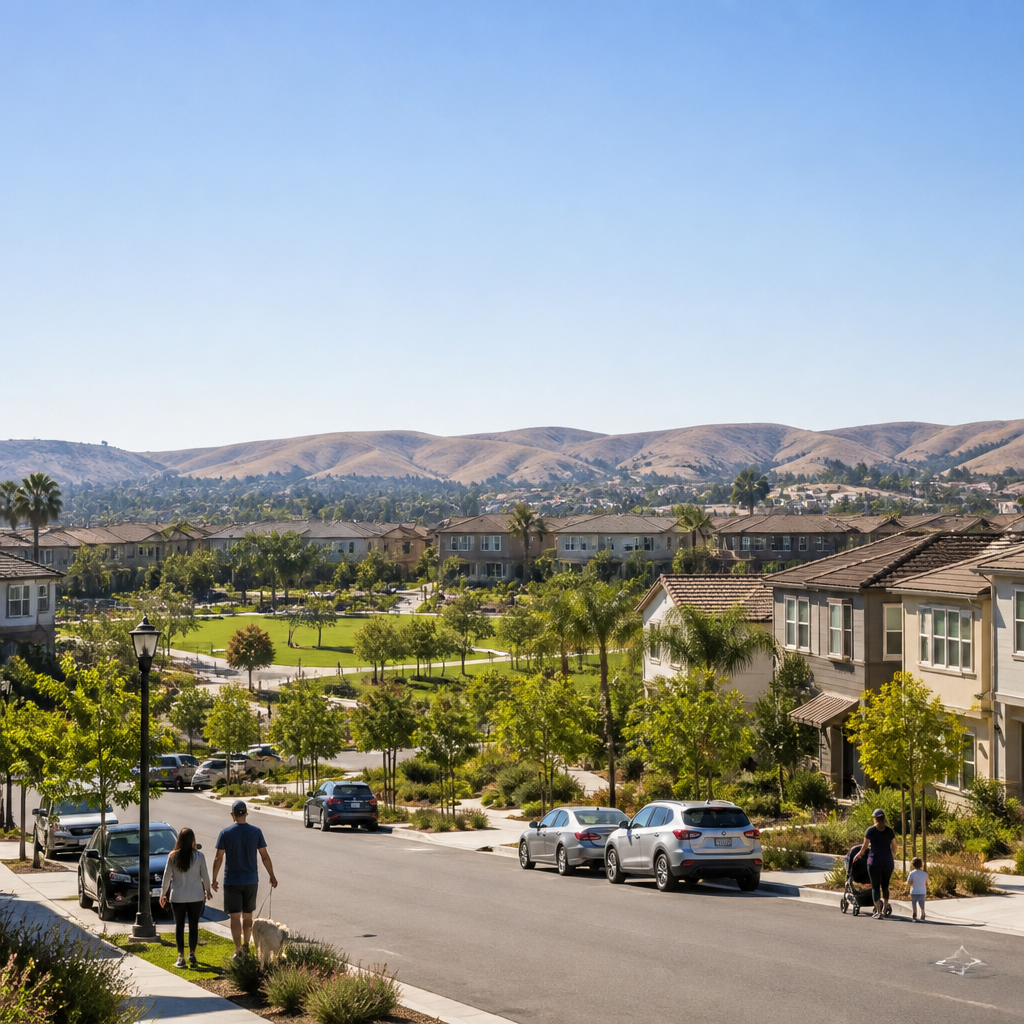
Safety and stability rank high for retirees comparing cities. According to NeighborhoodScout, Camarillo’s overall crime rate remains below California averages, with property crime probabilities listed in the low single-digit percentage range annually. Residential streets off Las Posas Road, Arneill Road, and Ponderosa Drive feature single-story ranch homes, condominiums, and age-targeted communities. Many homes include low-maintenance yards and attached garages, which appeal to those aiming to downsize from larger suburban properties while staying near family in Ventura County.
The city’s layout also helps older adults maintain independence. According to Walk Score, central Camarillo records a walk score in the mid-50s, with some pockets edging higher where shops cluster along Carmen Drive and Daily Drive. Short drives of under 5 miles typically reach St. John’s Pleasant Valley Hospital, the Camarillo Public Library, and major grocery options on Las Posas Road. This compact footprint reduces travel stress compared with more sprawling Southern California suburbs.
Late afternoon along Ventura Boulevard in Old Town Camarillo often brings the soft clang of dishes from local cafés, the aroma of roasted coffee drifting from Zander’s Coffee, and the glow of string lights over sidewalk patios. The breeze that slips in from the Oxnard Plain feels cooler against shaded benches near the Camarillo Ranch entrance, while traffic on Lewis Road hums at a gentle, predictable pace. That sensory mix helps many seniors feel oriented and grounded after a significant relocation.
Which Camarillo Neighborhoods Work Best for Senior Lifestyles?
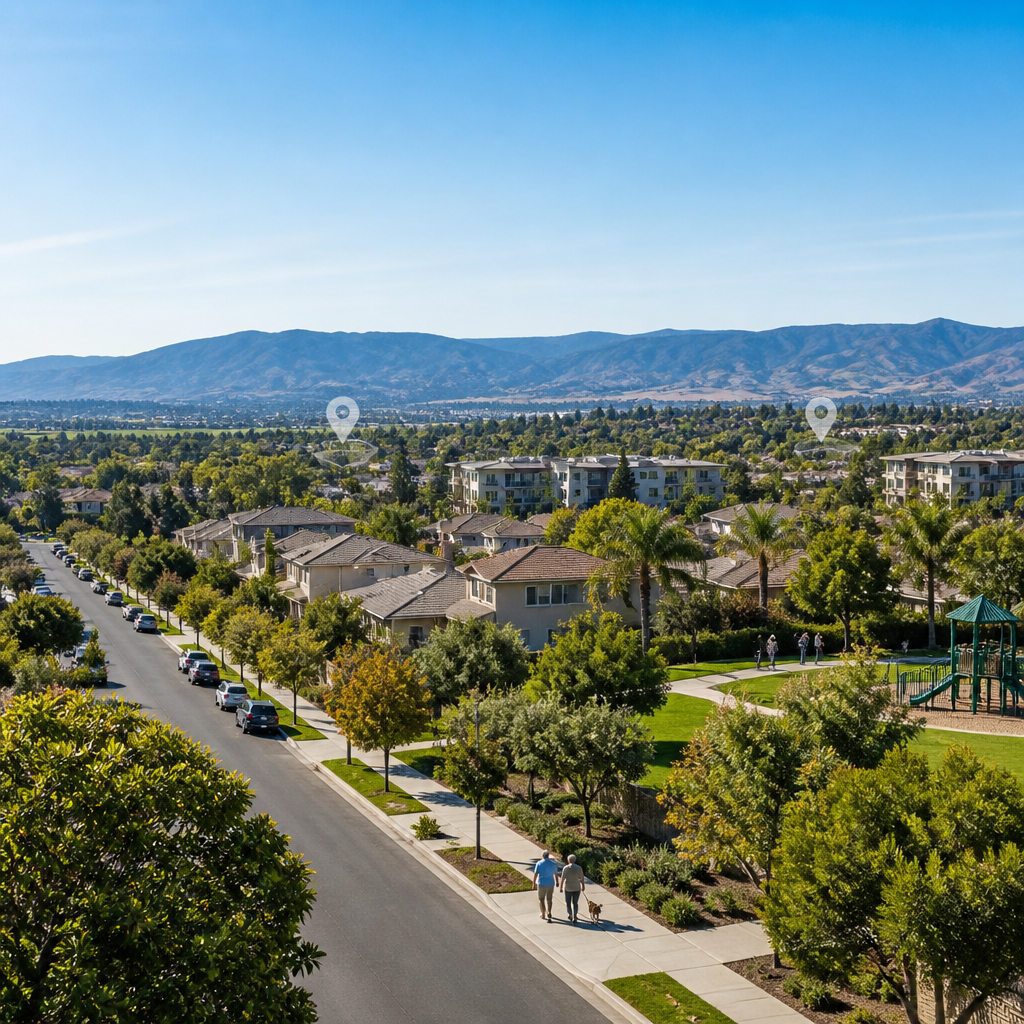
Mission Oaks in eastern Camarillo offers a mix of condominiums, single-story homes, and planned communities along Mission Oaks Boulevard, Ponderosa Drive, and Woodcreek Road. Parks such as Mission Oaks Park and Pitts Ranch Park sit within roughly 1 mile of many residential clusters. According to the Pleasant Valley Recreation and Park District, more than 28 parks serve the broader Camarillo area, creating numerous flat walking loops and picnic areas where seniors can stay active without driving long distances.
The Village at the Park area near Rancho Rosal Elementary School and Pleasant Valley Fields emphasizes newer construction, wide sidewalks, and access to the YMCA across from Village Commons Boulevard. Many townhomes and detached homes here were built within the past 20 years, often featuring energy-efficient windows, step-free entries, and open floor plans. Distance from the 101 Freeway averages under 2 miles, yet interior streets remain relatively quiet, which can be attractive for residents sensitive to traffic noise.
Closer to central Camarillo, neighborhoods around Arneill Road, Dunnigan Street, and Las Posas Road place residents within approximately 1.5 miles of Camarillo Premium Outlets, Costco, Target, and the Camarillo Public Library. According to City of Camarillo demographics, household sizes trend around 2.6 persons, indicating a significant share of smaller households and downsized residences. Age-restricted communities and senior apartment options are scattered near Mission Oaks Park, along Paseo Camarillo, and off Avenida Valencia, allowing relatives to live nearby without sharing a property.
How Accessible Are Healthcare, Senior Services, and Daily Essentials?
Healthcare access forms a crucial factor when relocating to Camarillo for seniors. St. John’s Pleasant Valley Hospital on North H Street anchors acute care services, with urgent care centers on Las Posas Road and Rosewood Avenue supplementing coverage. According to Dignity Health, the hospital maintains more than 50 acute-care beds and a range of cardiac, surgical, and rehabilitation services. Many residential pockets within Mission Oaks and central Camarillo reach these facilities in under 10 minutes during typical traffic.
The Camarillo Health Care District on Ventura Boulevard provides case management, wellness classes, caregiver support, and transportation coordination. According to the Camarillo Health Care District, over 130 distinct programs and services target older adults, caregivers, and those with chronic conditions. The Pleasant Valley Senior Center near Burnley Street and Temple Avenue offers congregate meals, exercise classes, and social events. Weekly participation often reaches into the low hundreds, giving newcomers immediate opportunities to form friendships and establish routines.
Daily needs such as groceries, banking, and pharmacies concentrate along Las Posas Road, Arneill Road, and Carmen Drive. Several shopping centers including Las Posas Plaza, Camarillo Village Square, and the centers surrounding Camarillo Premium Outlets cluster within a roughly 3-mile radius. According to surveys summarized by AARP Livable Communities, older adults often prioritize having pharmacies, grocery stores, and medical offices within 1–3 miles. Camarillo’s compact commercial spine largely aligns with those preferences, especially for those who prefer shorter drives or rideshare trips.
Stepping into Camarillo Public Library on Las Posas Road, the cool air conditioning contrasts with the soft warmth of filtered afternoon sun along the reading-room windows. The faint smell of paper and coffee from the Friends of the Library bookstore mingles with the quiet rustle of pages turning. Outside, oaks shade the parking lot, and the muffled whoosh of cars along Las Posas fades quickly once the thick glass doors close, giving seniors a calm, tactile sense of refuge during errands.
What Transportation Options Support Independent Living in Camarillo?
Many seniors value the ability to drive shorter distances rather than navigate complex freeways. Camarillo’s street grid centers on Ventura Boulevard, Las Posas Road, and Arneill Road, with the 101 Freeway skirting the southern edge of town. According to Walk Score, Camarillo’s transit score sits in the low 20s, reflecting limited but focused bus routes. Gold Coast Transit District and VCTC Intercity buses connect Camarillo to Oxnard, Ventura, and Thousand Oaks, with stops near Carmen Drive and the Camarillo Town Center corridor.
For non-drivers, specialized transportation becomes vital. The Camarillo Area Transit (CAT) system offers fixed routes and dial-a-ride services. According to the City of Camarillo’s transit program data, dial-a-ride operates within a 10-mile service radius, serving medical appointments, shopping, and social visits, typically with advance reservations. Fares often remain under $5 per one-way trip for seniors and disabled riders, keeping costs manageable for frequent users. Many senior communities along Mission Oaks Boulevard and near Paseo Camarillo coordinate regular group trips using these services.
The Camarillo train station on Lewis Road provides Metrolink and Amtrak access toward Los Angeles and Santa Barbara. Travel times to Los Angeles Union Station generally range from about 70–90 minutes, depending on the schedule, which can be useful for occasional urban medical visits. Rideshare services such as Uber and Lyft operate widely in the city, and many retirees budget a monthly transportation allowance—often around $200–$300—to cover supplemental rides in addition to personal driving, especially at night or during winter rain.
How Do Cost of Living and Housing Options Align with Retirement Budgets?
Housing in Camarillo generally costs more than the national average but often less than coastal enclaves like Santa Barbara or Malibu. According to Redfin, typical home sale prices in Camarillo as of early 2026 fall into a broad band from the mid-$700,000s to over $1,100,000, depending on size, condition, and neighborhood. Entry-level condominiums and age-targeted communities can offer options in the low- to mid-$500,000s, giving downsizing homeowners from Los Angeles a chance to reduce mortgage balances or transition to all-cash purchases.
Property taxes matter significantly for fixed-income retirees. According to the Ventura County Tax Collector, base property tax rates in Ventura County often range from roughly 1.0% to 1.2% of assessed value annually, before special assessments. That means a home assessed at $650,000 may incur annual base taxes in the ballpark of $6,500–$7,800. Homeowners should also factor in HOA dues—frequently between $250 and $450 per month for many condominium or planned communities in Camarillo—which can cover landscaping, exterior maintenance, and amenities such as pools.
Rental options include senior apartments near Arneill Road, mixed-age complexes around Paseo Camarillo, and smaller buildings near Old Town Camarillo. According to listings aggregated by Apartments.com, one-bedroom apartments in Camarillo commonly list between about $2,000 and $2,600 per month in 2026, with senior-designated communities sometimes slightly below that range. Budget planning should incorporate utilities, which for a modest one- or two-bedroom residence may average around $150–$250 monthly, depending on air-conditioning usage and building efficiency.
What Everyday Lifestyle and Recreation Options Appeal to Seniors?
Camarillo’s recreation network caters strongly to adults in later life stages. Pleasant Valley Recreation and Park District operates facilities such as Bob Kildee Community Park, Freedom Park near the Camarillo Airport, and Adolfo Park near Adolfo Camarillo High School. According to PVRPD, more than 300 annual programs span fitness, arts, language, and social clubs. Freedom Park’s flat walking trails, model airplane field, and nearby dog park provide easy, low-impact activity zones only about 4 miles from many Mission Oaks addresses.
Dining and entertainment choices support relaxed, social routines. Lure Fish House on Arneill Road, Institution Ale Company on Ventura Boulevard, and Bandits Grill & Bar near the Camarillo Premium Outlets attract both locals and visiting family members. The outlets themselves contain more than 150 retailers, according to Camarillo Premium Outlets, offering climate-controlled indoor corridors and shaded outdoor seating where seniors can take frequent rests. Nearby, Snapper Jack’s Taco Shack and local favorite Roland’s Bakery supplement national brands with locally owned options.
Educational and cultural offerings also enrich daily life. California State University Channel Islands lies roughly 6 miles southeast of central Camarillo along Lewis Road, providing lifelong learning classes, public lectures, and performances. Adolfo Camarillo High School, Monte Vista Middle School, and Rancho Rosal Elementary host community events, concerts, and sports gatherings. According to GreatSchools, Adolfo Camarillo High School earns ratings in the upper range for college readiness, which often correlates with strong community support and well-maintained facilities that residents of all ages enjoy visiting.
The 70,000-resident scale cited at the start of this guide reflects a city large enough to support hospitals, senior centers, and diverse housing yet small enough to remain navigable. That population figure from U.S. Census QuickFacts underscores how Camarillo balances services and manageability for retirees. The Camarillo Health Care District website offers frequently updated information on classes, transportation assistance, and caregiver resources across the city. Retirees who register listing alerts, monitor new Camarillo inventory weekly through Q1 and Q2, and schedule tours within 48 hours of suitable homes hitting the market before the late-spring surge typically secure preferred floor plans and neighborhoods ahead of slower-moving buyers.
Categories
Recent Posts